




Keeping your cannabis trimming tools clean is essential for maintaining their efficiency and ensuring a hygienic environment for your plants. This guide covers the importance of cleaning, the best scissor cleaning solution options available, and effective maintenance methods.
Many cultivators face challenges with resin buildup, which can hinder performance and lead to unsatisfactory results. By understanding best practices, you can enhance the longevity and performance of your favorite tools.
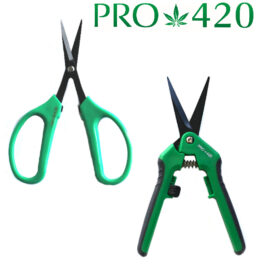
We will explore the significance of regular maintenance and the most practical steps to keep your equipment in top condition. Whether you use classic shears or spring loaded scissors, a clean blade is a functional blade.
Key Takeaways
- Efficiency First: Removing “finger hash” and resin prevents the blades from sticking, ensuring a smooth, effortless cutting rhythm.
- Plant Health: Clean tools prevent the cross-contamination of molds, mildews, and pathogens between different plants or harvests.
- Tool Longevity: Regular removal of acidic plant resins prevents the microscopic pitting and corrosion that dulls stainless steel over time.
- Solvent Choice: While isopropyl alcohol is the standard, specialized resin removers offer faster results with less scrubbing for heavy buildup.
- Lubrication: Post-cleaning lubrication is vital to protect the pivot point and keep the action of the scissors feeling “lively” and responsive.
Why Is Cleaning Cannabis Trimming Scissors Essential?
Cleaning cannabis trimming scissors is crucial for performance, hygiene, and tool longevity. Regular cleaning prevents resin buildup, which can significantly impair the scissors’ cutting efficiency and lead to physical strain.
When resin accumulates, it increases friction on the blades. This can cause the edges to “tear” rather than “slice,” which damages the plant and degrades the quality of your harvest supplies.
Moreover, clean tools are vital for plant health. Dirty tools can introduce contaminants that affect growth and yield, much like how a dirty glass one hitter can ruin the flavor of a fresh session.
How does resin buildup affect performance?
Resin buildup creates a sticky surface that hinders the smooth operation of the blades. As it thickens, it can even cause the scissors to lock up entirely during a session.
This leads to reduced precision, making it difficult to achieve the “surgical” cuts required for high-quality flower. Increased friction also accelerates wear and tear on the pivot screw and the metal edges.
Ultimately, neglecting to clean your scissors results in subpar results and higher costs. You will find yourself replacing tools more often than necessary if you allow resin to harden on the steel.
What are the benefits of regular scissor maintenance?
Regular maintenance ensures improved cutting precision, allowing for cleaner and more professional-looking trimming. It also makes the work much easier on your hands and wrists over long hours.
Maintaining clean scissors can significantly extend their lifespan, protecting your investment in high-end 420 accessories. A well-cared-for pair of shears can last for many years of heavy use.
Finally, cleaning promotes better hygiene in the grow room. Minimizing the risk of transferring pathogens between plants is crucial for maintaining a healthy, high-yielding crop and avoiding the loss of material.
What Are the Best Cannabis Scissor Cleaning Solutions Available?
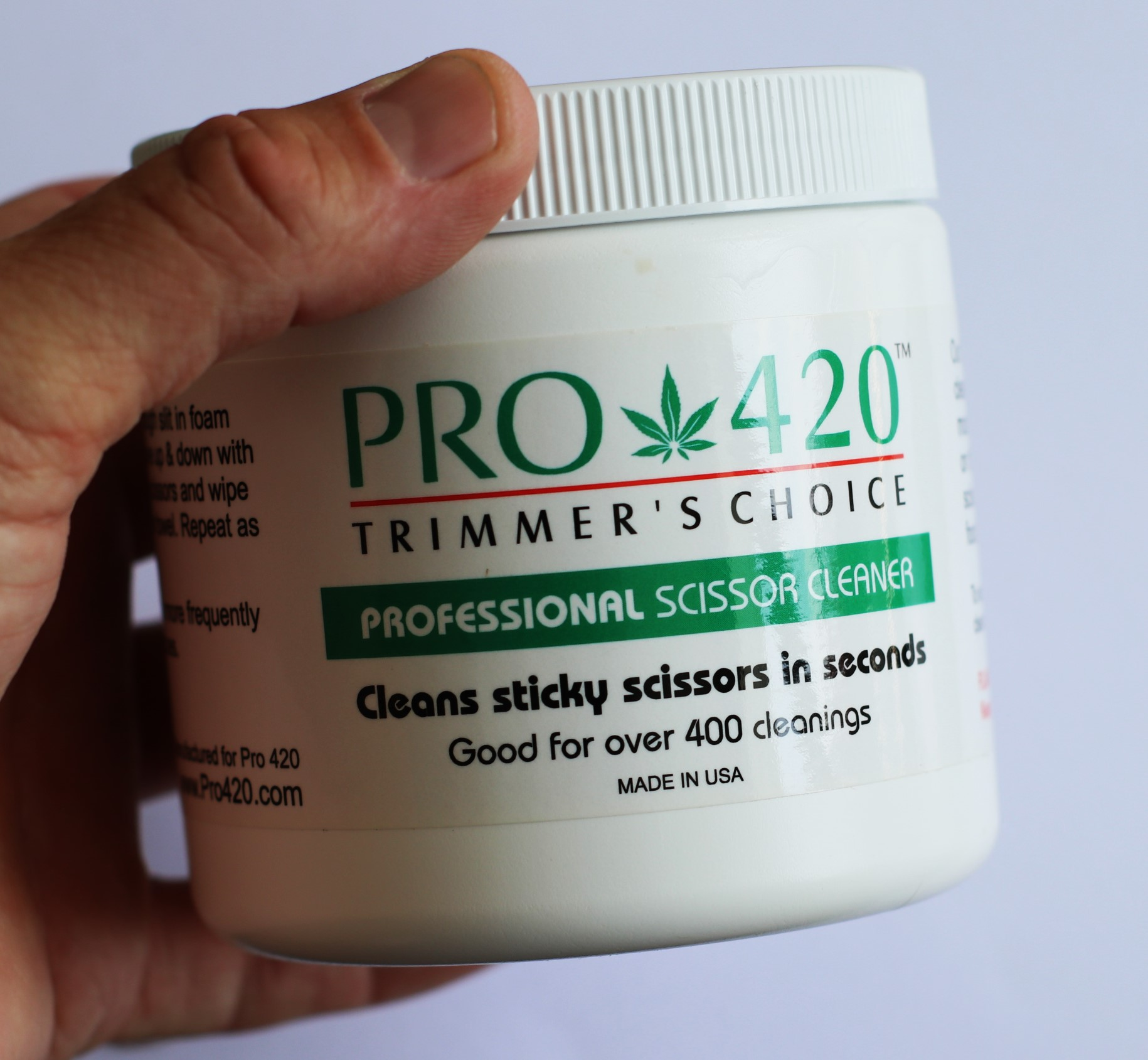
Various scissor cleaning solution options are available for trimming scissors, ranging from household staples to professional-grade solvents. Choosing the right one depends on the level of buildup you are facing.
Understanding the safety and effectiveness of these agents is essential. You want a solution that dissolves resin quickly without damaging the handles or the protective coatings on the blades.
| Cleaning Solution | Effectiveness | Tool Safety | Best For |
| Isopropyl Alcohol (70%+) | High | Generally Safe | Daily maintenance / light resin |
| Specialized Resin Remover | Very High | Safe | Heavy buildup / industrial use |
| Citrus-Based Cleaners | Moderate | Safe | Eco-conscious / light cleaning |
| Vinegar & Water | Low | Safe | Non-toxic / mild sanitization |
Specialized resin removers vs. isopropyl alcohol
Specialized resin removers are designed specifically to tackle the unique chemical structure of cannabis resins. These often outperform alcohol by breaking down the sticky compounds more efficiently.
While isopropyl alcohol is a common and effective agent, it may require repeated applications to remove heavy, hardened resin. It can also dry out certain plastic or rubber grips over time.
Specialized cleaners often include a light lubricant that stays on the blade, providing a “non-stick” barrier for the next round of trimming. This can help you work longer before needing another cleaning.
Which eco-friendly and non-toxic cleaners are effective?
Eco-friendly and non-toxic cleaners are becoming popular as cultivators move toward sustainable practices. These products effectively remove residue without harming the user or the environment.
Many of these utilize natural ingredients like citrus oils or biodegradable soaps. These alternatives align with the “clean green” philosophy and are safe to use around your glass pipes and other gear.
While they may require a bit more “elbow grease” than harsh chemicals, they are a great choice for maintenance. They ensure that no chemical odors are left on your tools to contaminate your harvest.
How to Clean Cannabis Trimming Scissors: A Step-by-Step Guide
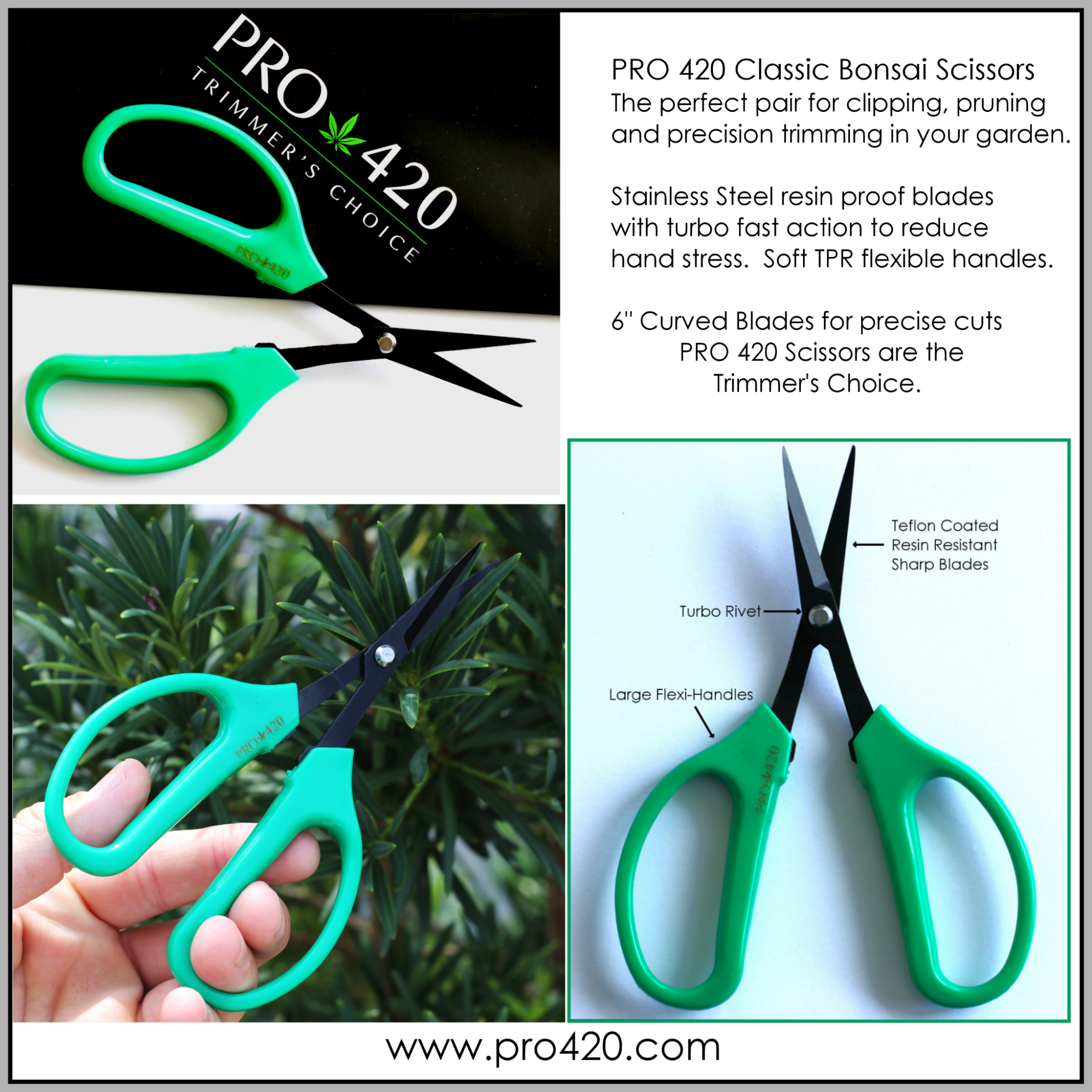
Cleaning your scissors is a simple process that requires a few essential supplies. Following a systematic approach ensures that your tools are thoroughly sanitized and ready for the next task.
Gather a lint-free cloth, a small brush (like a toothbrush), and your chosen scissor cleaning solution. If you are dealing with very sticky resin, wearing safety gloves can keep your hands clean.
Start by wiping away any loose leaf material. This prevents the resin from turning into a “paste” once the solvent is applied, making the overall cleaning process much faster and easier.
Detailed process to remove sticky resin safely
Apply the cleaning solution directly to the blades, ensuring you cover the areas near the pivot point where resin often hides. Let the solution sit for a minute to penetrate the buildup.
Use the small brush to scrub the blades gently, focusing on the edges. If you are using spring loaded scissors, pay extra attention to the spring mechanism to ensure it stays clear of debris.
Wipe away the loosened resin with your cloth and rinse the blades with warm water if the cleaner requires it. This removes any chemical film that might interact with your plants later.
Ensure the scissors are completely dry before storage. Even stainless steel can develop “water spots” or surface rust if left damp inside a closed best one hitter dugout or drawer.
Quick methods for cleaning shears on the fly
If you are in the middle of a harvest, you may not have time for a deep clean. Many pros keep a small “scrub jar” filled with alcohol and a sponge on their workspace.
Simply dipping the blades into the alcohol and wiping them quickly on the sponge can keep you moving. This prevents the resin from hardening and keeps the blades sliding smoothly.
Another quick trick is using a “non-stick” spray or a light coat of hemp oil on the blades before you start. This creates a temporary barrier that makes the eventual cleanup much faster.
Maintenance and Long-Term Tool Preservation
Long-term maintenance is the key to preserving your investment in quality cutting tools. Sharpening and lubrication are just as important as cleaning when it comes to performance.
Dull scissors force you to use more hand pressure, which leads to “the claw” or hand cramping. Keeping a razor edge ensures the tool does the work, rather than your muscles.
Proper storage is the final piece of the puzzle. Storing your tools in a protective case or sheath prevents the blades from getting nicked or scratched when they aren’t being used.
Best practices for sharpening and lubricating
Sharpen your blades regularly using a fine-grit whetstone or a specialized sharpening rod. Follow the original bevel of the blade to ensure you don’t change the cutting geometry.
Apply a drop of food-safe lubricant to the pivot screw monthly. This ensures the action remains smooth and prevents the “squeak” that can occur when metal rubs against metal.
Clean and lubricate your 420 accessories simultaneously to stay organized. A well-maintained kit is a sign of a professional cultivator who respects their tools and their craft.
Mastering the Clean: A Professional Finish for Your Trimming Scissors
Maintaining pristine trimming tools is a fundamental skill that separates the amateur from the connoisseur. A clean pair of scissors is not just about aesthetics; it is about the tactile connection between the grower and the plant. By integrating these cleaning habits into your workflow, you ensure every cut is precise and every harvest is hygienic.
Treat your tools with the same care you would give to your glass bongs or high-end pipes. Consistent maintenance results in a better final product and a much more enjoyable trimming experience. As you move forward, remember that the quality of your smoke begins with the quality of your tools.
Frequently Asked Questions (FAQ)
How often should I clean my trimming scissors?
You should wipe them down every 30 to 60 minutes during a harvest and perform a deep clean after every session. This prevents resin from ever becoming truly “baked on” to the steel.
Can I use boiling water to clean my scissors?
While it can soften resin, boiling water is generally not enough to remove sticky oils. It can also damage plastic handles or cause certain metal alloys to expand and contract, potentially loosening the pivot.
Is rubbing alcohol safe for all handle types?
Most handles are fine, but some soft-touch rubber grips can become “tacky” or start to dissolve if exposed to high-strength alcohol for too long. Always test a small, inconspicuous area first.
Does vinegar really work for resin?
Vinegar is a weak acid and isn’t very effective at dissolving the oily resins found in cannabis. It is better for removing water spots or sanitizing a tool than it is for removing heavy buildup.
How do I store my scissors between harvests?
Clean them thoroughly, apply a light coat of oil to the blades, and store them in a dry, room-temperature environment. Keeping them in a protective sheath prevents the blades from dulling if they touch other tools.